
I’ve been shooting landscapes professionally for over eight years, and one question keeps coming up from fellow photographers: “Does ND Filter Reduce Sharpness?” I asked myself the same thing when I bought my first 10-stop ND filter for those dreamy long exposures.
After thousands of shots and plenty of side-by-side testing, I can give you a clear, honest answer based on real-world experience.
In this blog post, I’ll share what I’ve learned about ND filters and image sharpness through years of field work and testing. My goal is to help you understand when and why sharpness might be affected, so you can make simple decisions about your gear and technique.
Let’s explore the relationship between ND filters and sharpness, backed by practical experience and technical understanding.
Understanding ND Filters and Image Quality
Before we answer the sharpness question, it’s important to understand what happens when you place any piece of glass in front of your lens. As a working photographer, I’ve tested dozens of filters over the years, and the quality differences are real and significant.
Neutral density filters reduce light entering your lens by incorporating dark material into the glass or applying special coatings.
Quality ND filters use materials and coatings designed to block light uniformly without affecting color or introducing optical defects. The manufacturing process and materials used directly impact how the filter performs.
The Role of Glass Quality
Not all glass is created equal. Premium optical glass undergoes precision grinding and polishing to maintain flatness and clarity. Lower-quality filters may have slight variations in thickness, surface irregularities, or internal defects that can degrade sharpness. This is why filter quality matters tremendously.
Multi-Coating Technology
Modern quality filters feature multi-coating—multiple layers of anti-reflective coating applied to both sides of the glass. These coatings serve several purposes: reducing flare, minimizing ghosting, improving light transmission, and protecting the glass surface. Uncoated or poorly-coated filters are more prone to image quality issues.
Why Filter Quality Varies
The photography filter market ranges from budget options under twenty dollars to premium filters costing several hundred. This price range exists for good reason—manufacturing precision optical glass with excellent coatings is expensive.
As someone who’s tested both ends of the spectrum, I can tell you the difference is immediately visible in your images. All filters affect image quality in some way or other.
Does ND Filter Reduce Sharpness?
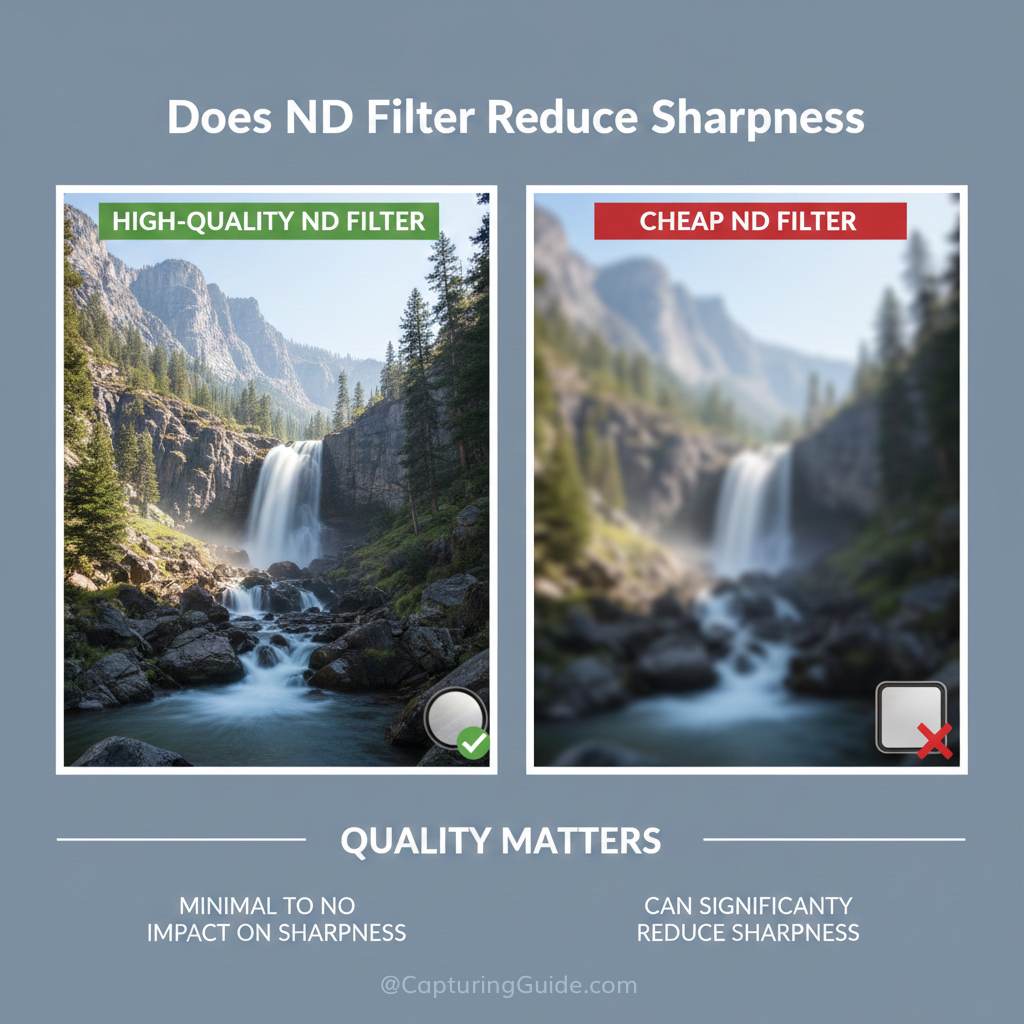
The honest answer is: it depends on the filter quality. A high-quality ND filter from reputable manufacturers should have minimal to no noticeable impact on sharpness. However, cheap or poorly-made ND filters can absolutely reduce sharpness, sometimes dramatically.
In my professional work, I use premium ND filters from trusted brands, and I’ve conducted direct comparisons—shooting the same scene with and without the filter at identical settings. With quality filters, I’ve found the sharpness difference to be negligible or undetectable at normal viewing sizes. Any minor softness is typically far less noticeable than issues like camera shake or focus errors.
The key phrase here is “quality filters.” Budget ND filters often suffer from several problems that affect sharpness. Poor glass quality can introduce distortion or optical aberrations. Inadequate coatings create internal reflections that reduce contrast and perceived sharpness.
I learned this lesson early in my photography journey. My first ND filter was an inexpensive no-name brand, and my images looked noticeably softer.
I blamed my technique, my lens, everything except the filter. Only after upgrading to a quality filter did I realize the cheap one had been the culprit all along.
Color cast is another issue with lower-quality ND filters, and while not directly related to sharpness, it affects overall image quality. Many cheap filters add blue, magenta, or green tints that require correction in post-processing, and extreme color correction can sometimes affect perceived sharpness.
From my testing and professional experience, I can confidently say that investing in quality ND filters is worth every penny. Brands with strong reputations in the photography community consistently deliver filters that maintain excellent sharpness while providing the light reduction you need.
Factors That Affect Sharpness When Using ND Filters
Based on years of field experience, I’ve identified several factors that influence whether you’ll see any sharpness reduction when using ND filters. Understanding these helps you maximize image quality.
Filter Quality and Construction
This is the most significant factor. Premium filters use high-quality optical glass with excellent flatness and clarity. They feature proper multi-coating and are manufactured to tight tolerances. Budget filters often cut corners in these areas, resulting in measurable sharpness loss.
In my kit, I use filters that cost more than some of my lenses cost me used, and they’re worth it because they don’t compromise image quality.
Stacking Multiple Filters
Even quality filters can reduce sharpness when stacked. Each additional piece of glass introduces more opportunities for degradation—more surfaces for reflections, more potential for misalignment, increased vignetting risk. I avoid stacking filters whenever possible and use holder systems or variable ND filters for situations requiring multiple filters.
When I absolutely must stack filters, I only use premium options and test the combination before critical shoots.
Filter Maintenance and Condition
Dirty, scratched, or damaged filters definitely reduce sharpness. I clean my filters regularly using proper lens cleaning supplies and inspect them for scratches or coating damage. A fingerprint or dust spot can create soft areas or reduce contrast significantly.
I treat my filters with the same care as my lenses because they’re just as important to final image quality.
Attachment and Alignment
How you attach the filter matters. Cross-threaded filters or poorly-fitted holders can cause the filter to sit at an angle, introducing optical problems. I always thread filters on carefully and ensure holder systems are properly aligned and secured.
Rushing this step has cost me shots in the past, so now I take the extra few seconds to ensure everything is properly mounted.
Shooting Technique
Even with perfect filters, poor technique causes sharpness issues. When using ND filters for long exposures, I always use a tripod, remote shutter release, and mirror lock-up (or electronic shutter). Wind, tripod stability, and camera shake become magnified during longer exposures.
I’ve also learned that autofocus can struggle through dense ND filters. I typically compose and focus before attaching the filter, then switch to manual focus to lock that setting.
Best Practices for Maintaining Sharpness
Through professional experience and plenty of trial and error, I’ve developed practices that ensure maximum sharpness when using ND filters. These techniques have served me well across thousands of shoots.
Invest in Quality Filters: This is non-negotiable in my professional work. I recommend brands known for optical excellence and proper manufacturing standards. The cost seems high initially, but these filters last for years and don’t compromise image quality. Consider it an investment in your lens system rather than just an accessory.
Keep Filters Clean and Protected: I carry my filters in individual protective pouches within a dedicated filter case. Before each shoot, I inspect them for cleanliness and gently clean if needed. Microfiber cloths and lens cleaning solution are always in my bag.
Use Proper Technique: I always focus before attaching dense ND filters, use a sturdy tripod for stability, employ remote shutter release or timer to eliminate shake, and give the camera a moment to settle after pressing the shutter. These habits have become automatic after years of shooting.
Test Your Filters: When you acquire new filters, test them at home before relying on them for important shoots. Compare images shot with and without the filter at 100 percent magnification. This reveals exactly what you’re working with and builds confidence in your gear.
Remove When Not Needed: I only use filters when they serve a specific purpose. Leaving an ND filter on “just in case” risks unnecessary image quality degradation and creates problems in situations where you need maximum light gathering.
- Also read this relevant post on Does ND Filter Remove Reflection?. I researched for several days and asked many of my fellow photographers about it.
Conclusion
Does an ND filter reduce sharpness? Quality ND filters from reputable manufacturers have minimal to no noticeable impact on sharpness in real-world use. However, cheap or poorly-made filters absolutely can reduce sharpness significantly, along with introducing color casts and other optical problems.
After eight years of professional landscape photography and extensive testing, my advice is clear: invest in quality ND filters, maintain them properly, use correct shooting technique, and test your gear before critical shoots. The difference between budget and premium filters is real and visible in your final images.
By following the best practices I’ve outlined—choosing quality filters, keeping them clean, using proper technique, and removing them when unnecessary—you can confidently use ND filters without sacrificing the sharpness your expensive lenses are capable of delivering.
About the Author: As a professional landscape photographer with eight years of experience, I’ve tested and used dozens of ND filters across various shooting conditions. The insights in this article come from real-world field experience and extensive side-by-side testing of different filter brands and qualities.